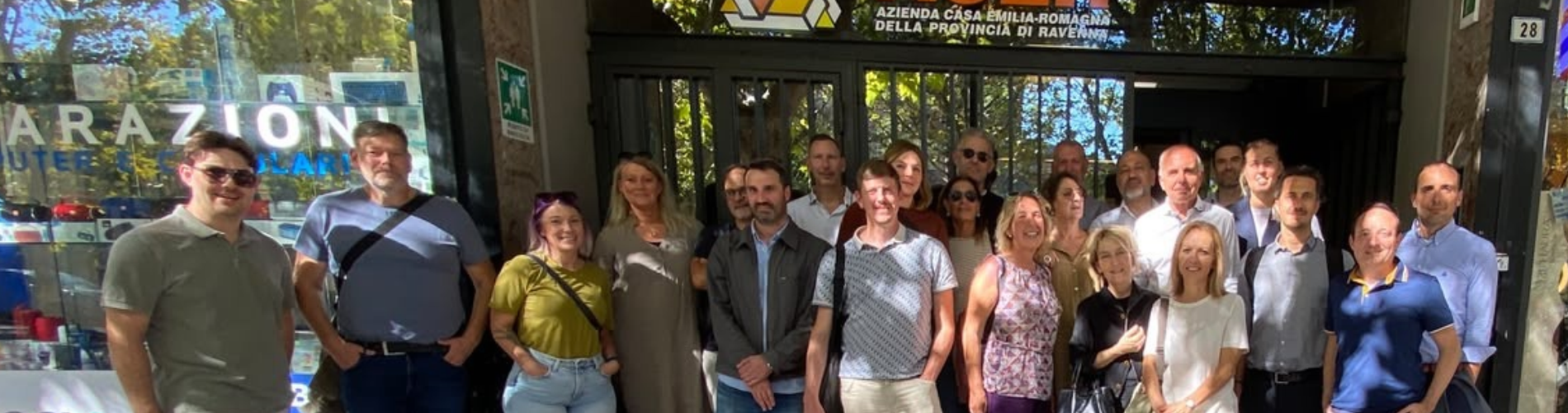
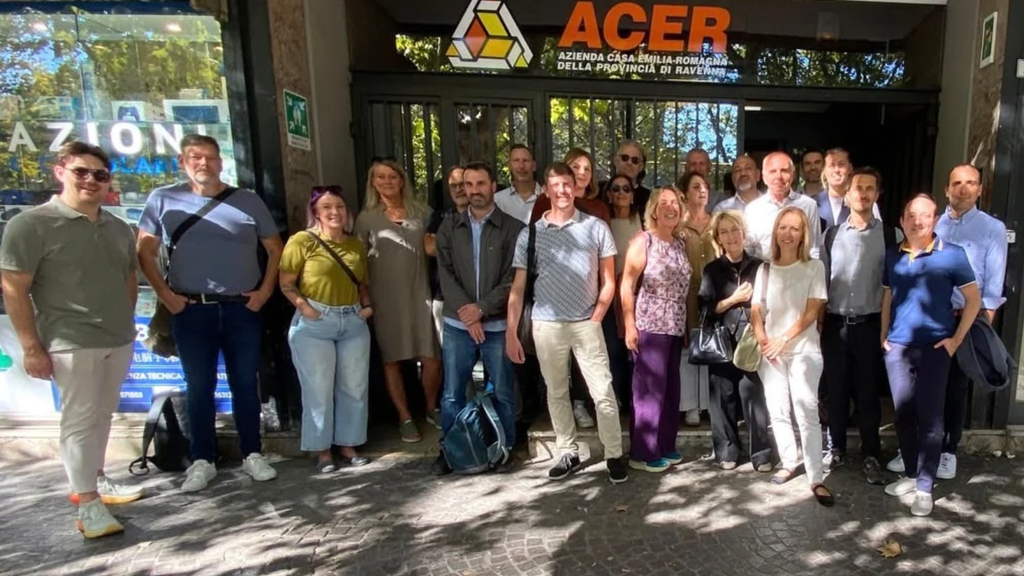
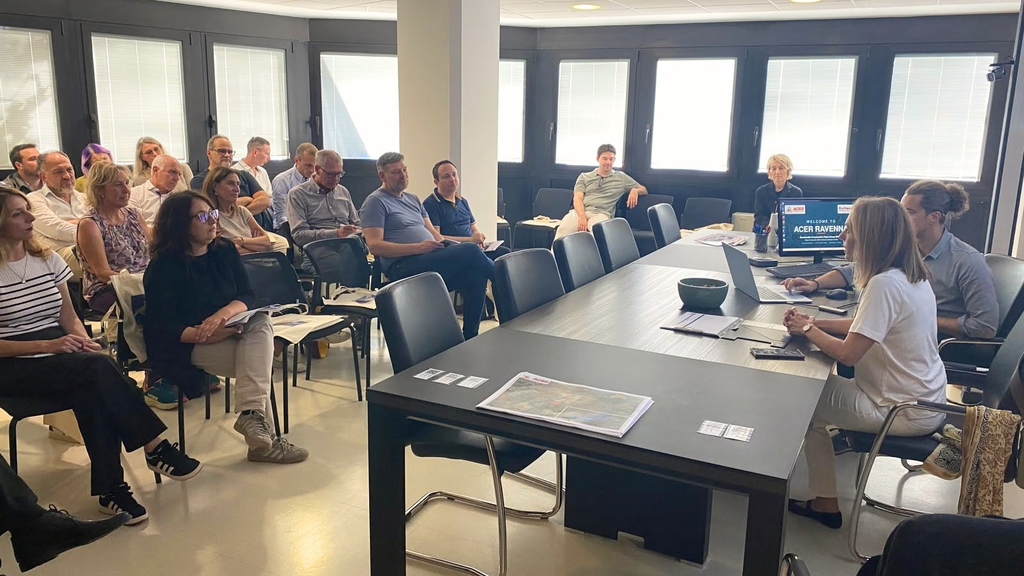
How can public and social housing providers prepare for increasingly frequent and extreme climate events? Our Sustainable Construction Topic Group met in Ravenna, Italy, hosted by ACER Ravenna, to explore this question.
Taking place from 30 September to 2 October, the meeting combined first-hand experience of the devastating floods that affected the province in 2023 and 2024 with practical workshops, research and experiences from Topic Group members.
Prepare the response before the emergency
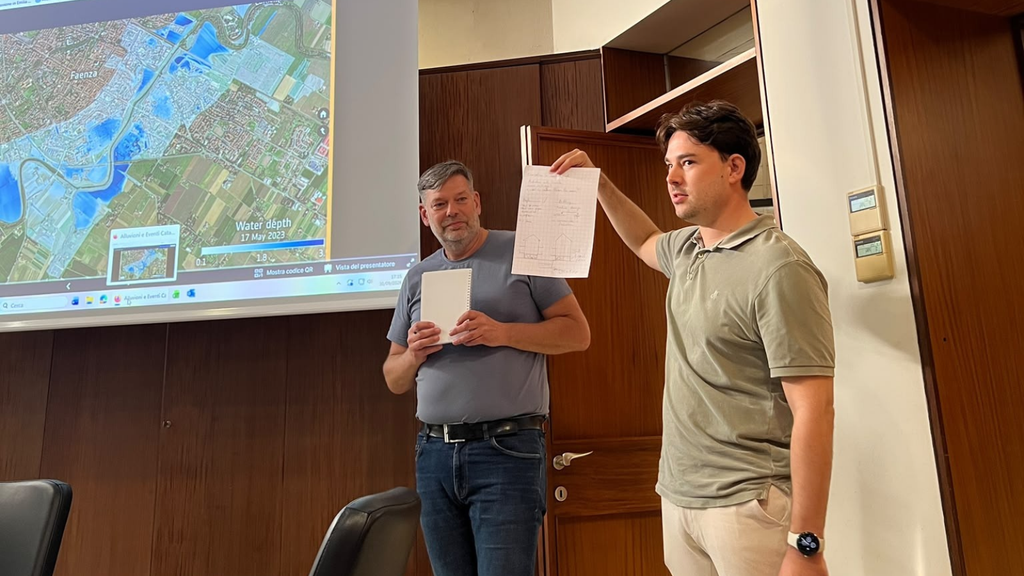
The floods in Faenza showed just how quickly housing organisations may need to act when an extreme event occurs. Three separate storm and flood events affected the Via Cimatti and Via Ponte Romano public housing areas. Water reached up to 4.5 metres in some locations, damaging homes, communal areas, heating systems, lifts and roofs.
“We have experienced dramatic events which showed us once again how fundamental it is to take care of both bricks and people when managing public or social housing,” stated Lina Taddei, President of ACER Ravenna. “Any time we think back to those terrible days, it is like a scar that reopens. We never thought it could happen here, but it did.”
“On the very first day of the Eurhonet meeting, I decided to show a video from those terrible days, including the voices of people asking for help. I saw the emotion on the faces of our employees once again, and I could see that the participants were deeply affected too.”
ACER Ravenna’s internal protocol helped to coordinate its response. This included clear communication between staff, direct information to tenants, and close contact with tenant representatives through social mediators. Building representatives helped identify who was still inside properties and shared information about conditions on the ground.
The experience showed why communication channels and responsibilities need to be clear before an emergency occurs.
Residents are part of the response
“Our strength was people: our tenants, the building representatives and the relationships we have built with them over the years,” explained Lina Taddei. She also highlighted the vast number of employees involved in the response and the young volunteers – known as the ‘Angels of the mud’ – who came from across Italy to help.
The importance of tenant involvement was explored further by Dragana Curovic, Leader of our Social Integration Topic Group. Residents bring local knowledge that housing organisations and emergency services may not have, helping to provide information on urgent needs, vulnerable residents and conditions in individual buildings.
Language differences, digital exclusion and lack of trust can act as barriers to tenant involvement. Using different communication channels and building relationships with residents over time therefore becomes part of climate resilience. Emergency training, tenant networks, risk awareness and identifying residents who may need additional support can also strengthen preparedness.
Recovering and rebuilding
ACER Ravenna’s experience showed that recovery is not simply a question of repairing everything as quickly as possible. Its response prioritised returning residents to their homes, beginning with those that had become uninhabitable, before turning to garages, cellars and other spaces. At the same time, the organisation had to manage costs and decide where improvements could be incorporated.
ACER Ravenna also highlighted the psychological strain experienced by residents. Tasks such as cleaning took on greater importance than we might initially imagine.
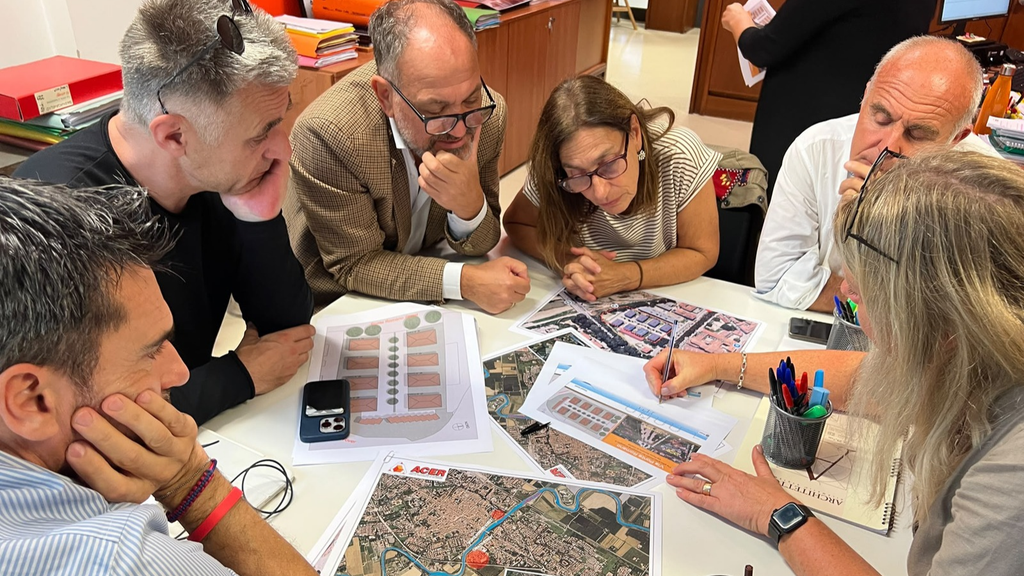
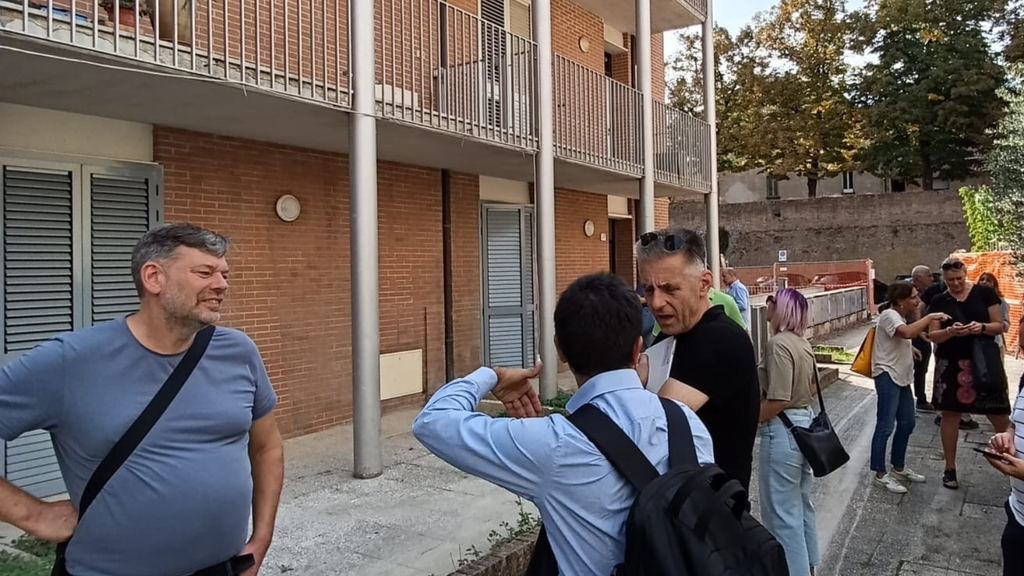
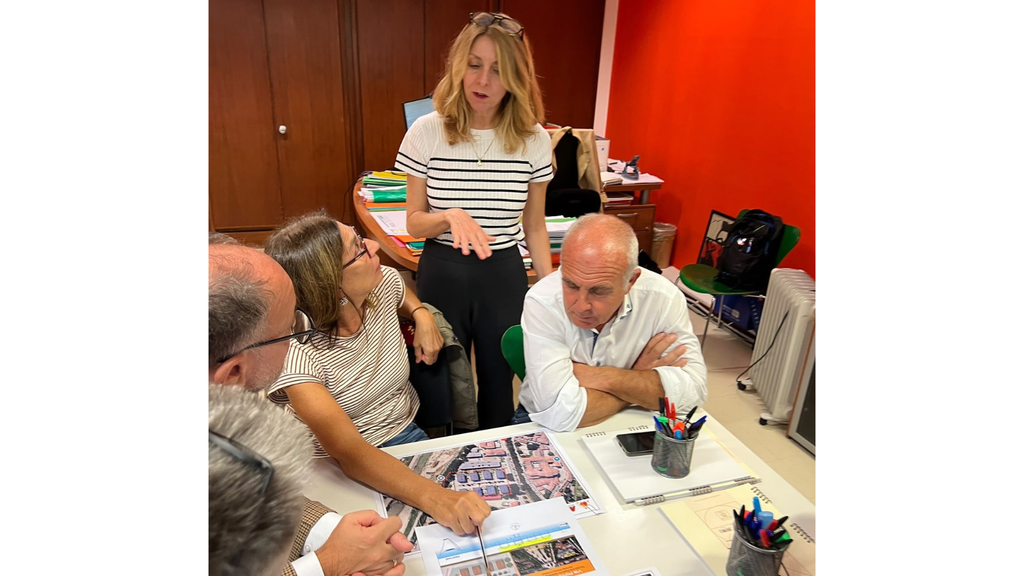
During the Flying Experts workshop, participants worked on the real case of the Via Ponte Romano, before visiting the site the following day. By working with other housing professionals from different countries, participants could explore possible responses to a concrete challenge.
The programme was complemented by research perspectives from Fabio Lepratto of Politecnico di Milano and Michele Morganti of Sapienza University of Rome, who explored architectural and urban regeneration and climate-responsive design.
Topic Group co-leader Isaac Scaramella stated: “We need to adapt our existing buildings and cities. A huge part of the built environment of tomorrow already exists today. We need to retrofit it, make it more resilient and rethink how our cities respond to heat, floods and other extreme events.”
From floods to heatwaves: designing for heat
Topic Group members also compared their experiences of the 2026 heatwaves: a growing challenge for housing providers. Homes designed primarily around keeping residents warm in winter increasingly need to remain comfortable during extreme heat.
“After this summer, the climate crisis no longer feels like something distant, abstract or limited to scientific reports. Extreme heat has been experienced directly by millions of Europeans,” said Isaac Scaramella.
Participants reported rising concerns about overheating, with particularly severe impacts for older residents. Where air conditioning was available, higher energy consumption also raised questions about affordability and sustainability. Topic Group members therefore discussed a combination of passive and active measures, including external solar shading, green roofs and façades, natural ventilation and insulation.
From lessons learned to action
One clear lesson from Ravenna was that climate resilience is not only about buildings. It also depends on people, communication and how prepared housing organisations are to respond. It reinforced the need to learn from previous emergencies, involve residents, understand emerging risks and use renovation to prepare neighbourhoods for the future.
“I really hope that public and social housing providers will take lessons from our experience, our emergency protocol and the way we tried to repair buildings with limited funds while also building resilience,” said Lina Taddei. “The biggest lesson I took from what we lived through is to respect nature and act now.”
We warmly thank Lina Taddei and all colleagues from ACER Ravenna for hosting the meeting, our Sustainable Construction Topic Group Leaders Isaac Scaramella and Johann Plagemann, and all the participants who contributed their experience.