
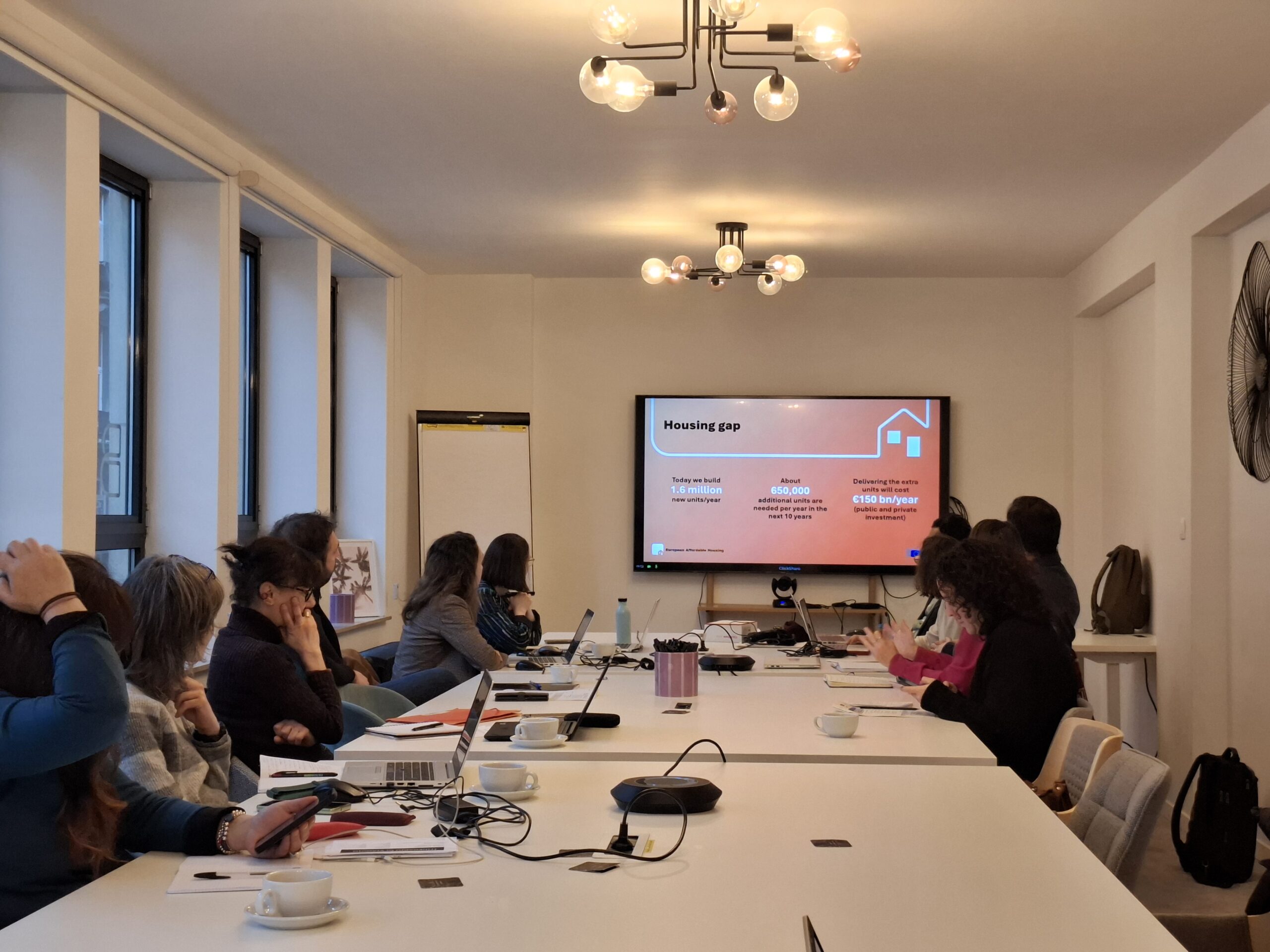
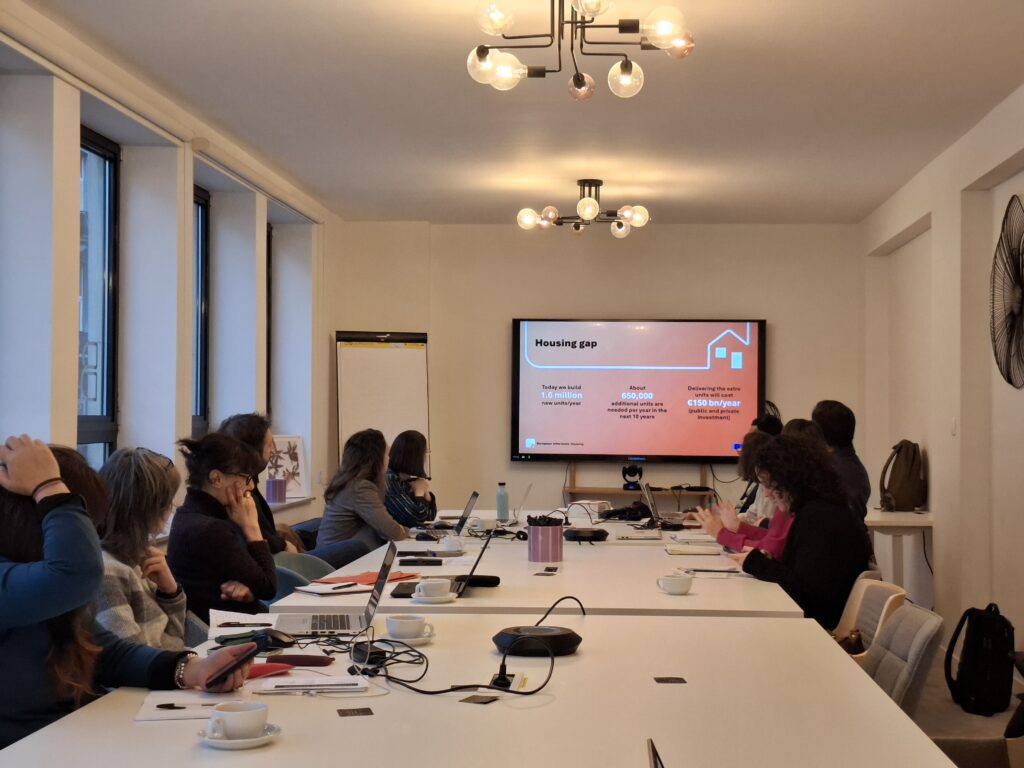
How can European housing policy translate into affordable and inclusive housing for people with disabilities? This question was at the centre of the IN-HABIT event held on 29 January in Brussels and online. The session provided the opportunity to explore the implications of theEuropean Affordable Housing Plan, published in December 2025, for inclusive housing across Europe.
Setting the policy context
The first session, moderated by Marie Denninghaus (European Disability Forum), set the policy context in which IN-HABIT operates.
Edit Lakatos (Policy Officer, Housing Task Force of the European Commission) presented the key elements of the newly adopted European Affordable Housing Plan. She also outlined the next steps. Contributions from the European Parliament, with Maria Ohisalo (Member of the European Parliament), and Housing Europe, represented by Alice Pittini (Research Director), reinforced a key message. Affordability and the inclusion of vulnerable communities must remain at the core of EU housing action.
IN-HABIT Project Coordinators, EASPD, underlined the continued reliance on institutionalisation across Europe. Estelle Houtart (Junior Policy Officer, EASPD) presented the key findings of a 2025 EASPD study on housing. The study showed limited access to affordable and accessible housing. It also revealed weak coordination between housing and disability services.
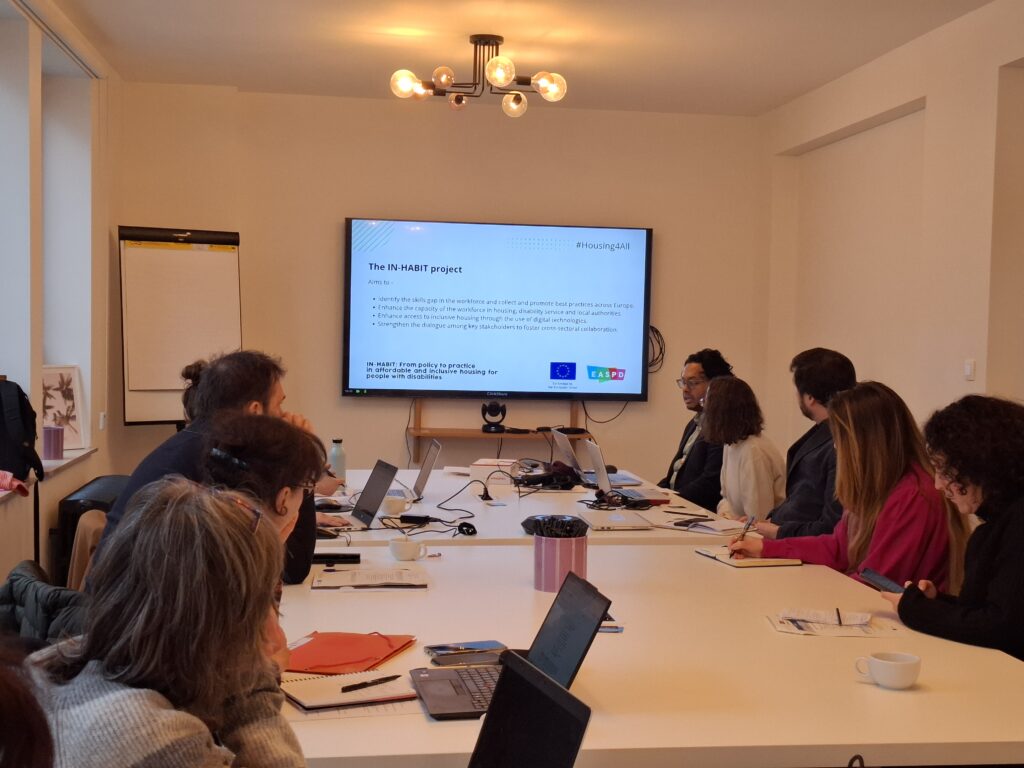
Omor Dhali (Project Officer, EASPD) presented the IN-HABIT project as a strategic response to these gaps. The project works to bridge EU-level ambitions with practical solutions on the ground.
From policy to practice: experiences from across Europe
The second session shifted the discussion from policy frameworks to practical implementation. Moderated by Hanga Hegedüs (Board Member, EASPD), the session explored concrete experiences from across Europe:
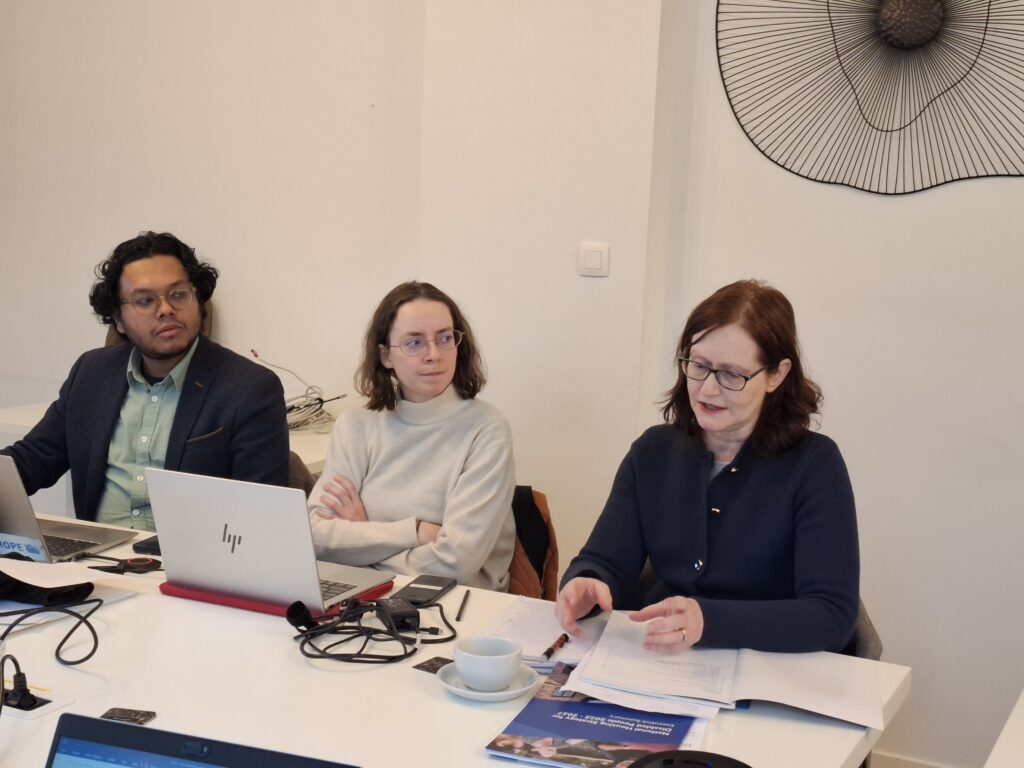
In Ireland, Lisa Fenwick (Community Development Officer, Disability Federation Ireland) presented progress to date and on-going challenges under the National Housing Strategy for Disabled People.
In France, DELPHIS, one of our member organisations, was represented by Laure Bourgoin (Project Manager and Leader of Housing and Autonomy missions). She stressed that inclusive housing is a collective responsibility that goes beyond minimum legal requirements.
The discussion also examined Finland’s Housing-First model. Juha Kaakinen (Professor at Tampere University and Board Member of Tukena) explained how supportive legislation enables inclusive housing solutions. He also emphasised that long-term political commitment is essential to prioritise independent living.
The IRMÁK National Association shared a provider perspective from Hungary. The organisation emphasised the importance of workforce skills and service delivery reform. It also highlighted the concrete benefits of deinstitutionalisation for both individuals and communities.
Best practices from the field
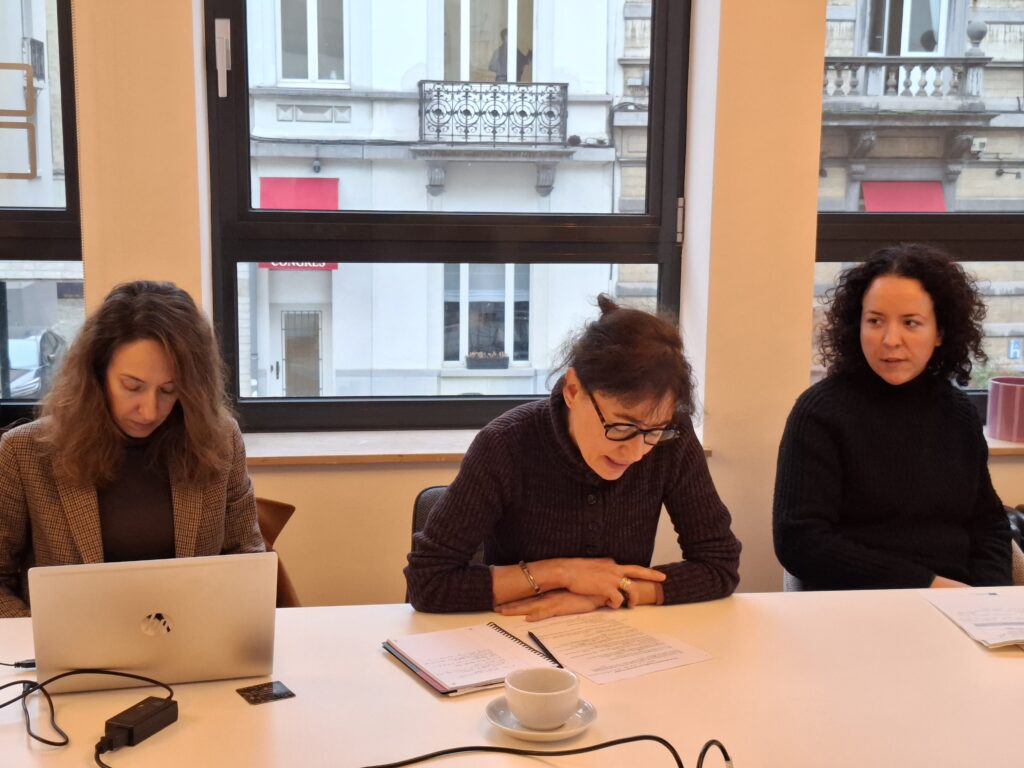
Before the Q&A and participants’ discussion, the event provided the opportunity to hear from two best practices already implemented in the field.
- Münchner Wohnen, one of our member organisations, presented Living in the Neighbourhood, a practice that supports people to remain in their communities while accessing care and social services, illustrating how integrated local support can strengthen independent living.
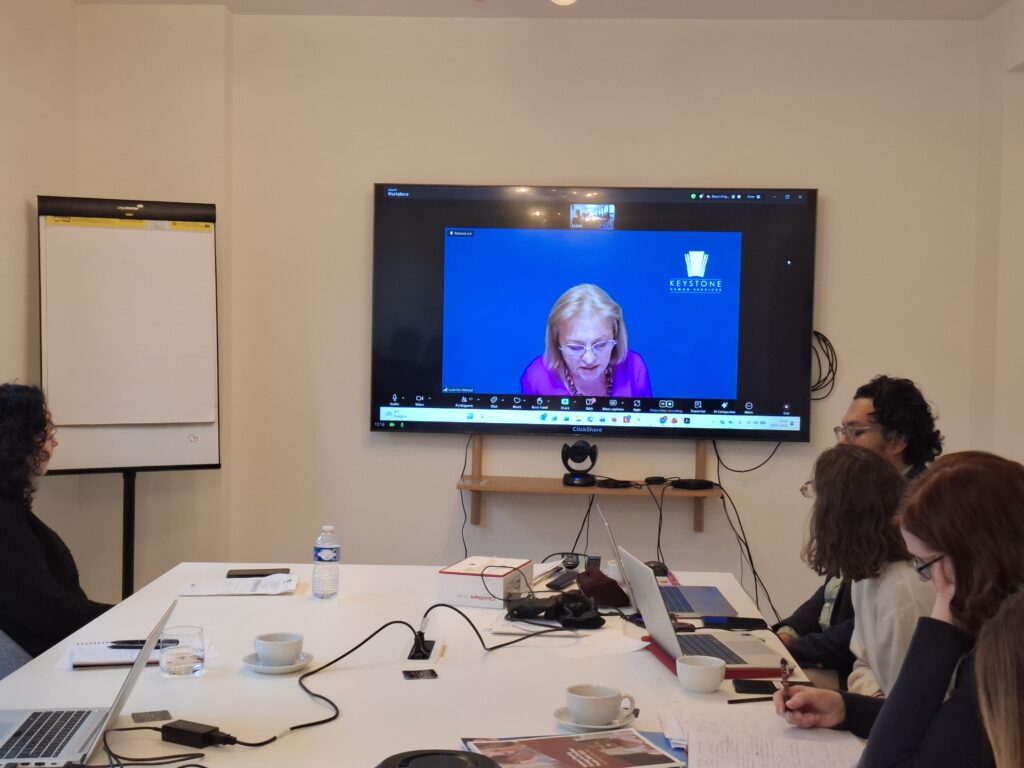
- Keystone Moldova shared an example of inclusive housing, demonstrating how community-based support enables persons with disabilities to live independently and participate fully in society.
Key takeaway
Overall, the discussions confirmed that inclusive and affordable housing cannot be achieved through housing policy alone. Coordinated action is essential. Public authorities, housing providers, disability organisations, and care services must work together to transform EU ambitions into lasting change.
IN-HABIT brings together stakeholders from across the housing ecosystem. It promotes more coherent, person-centred and sustainable housing approaches, contributing to the translation of EU commitments on non-discrimination and independent living into practice.