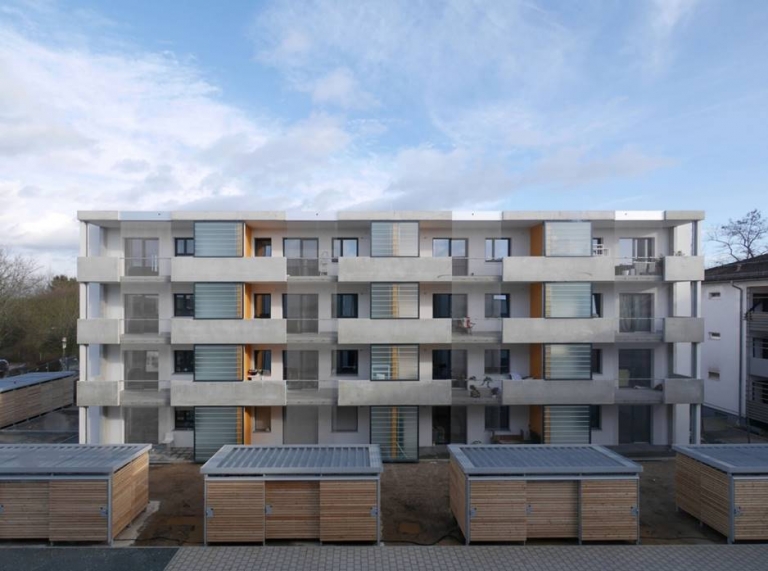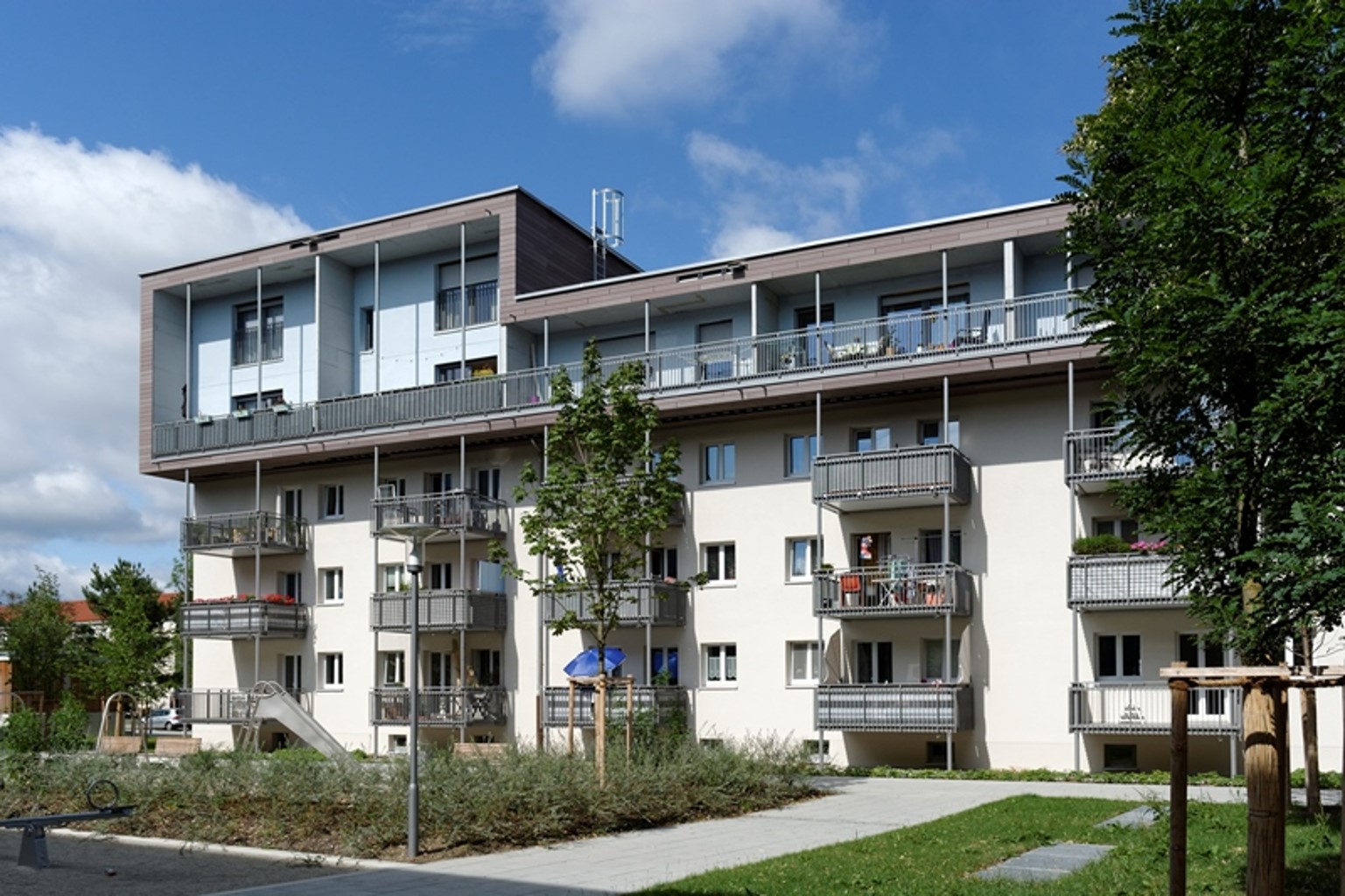
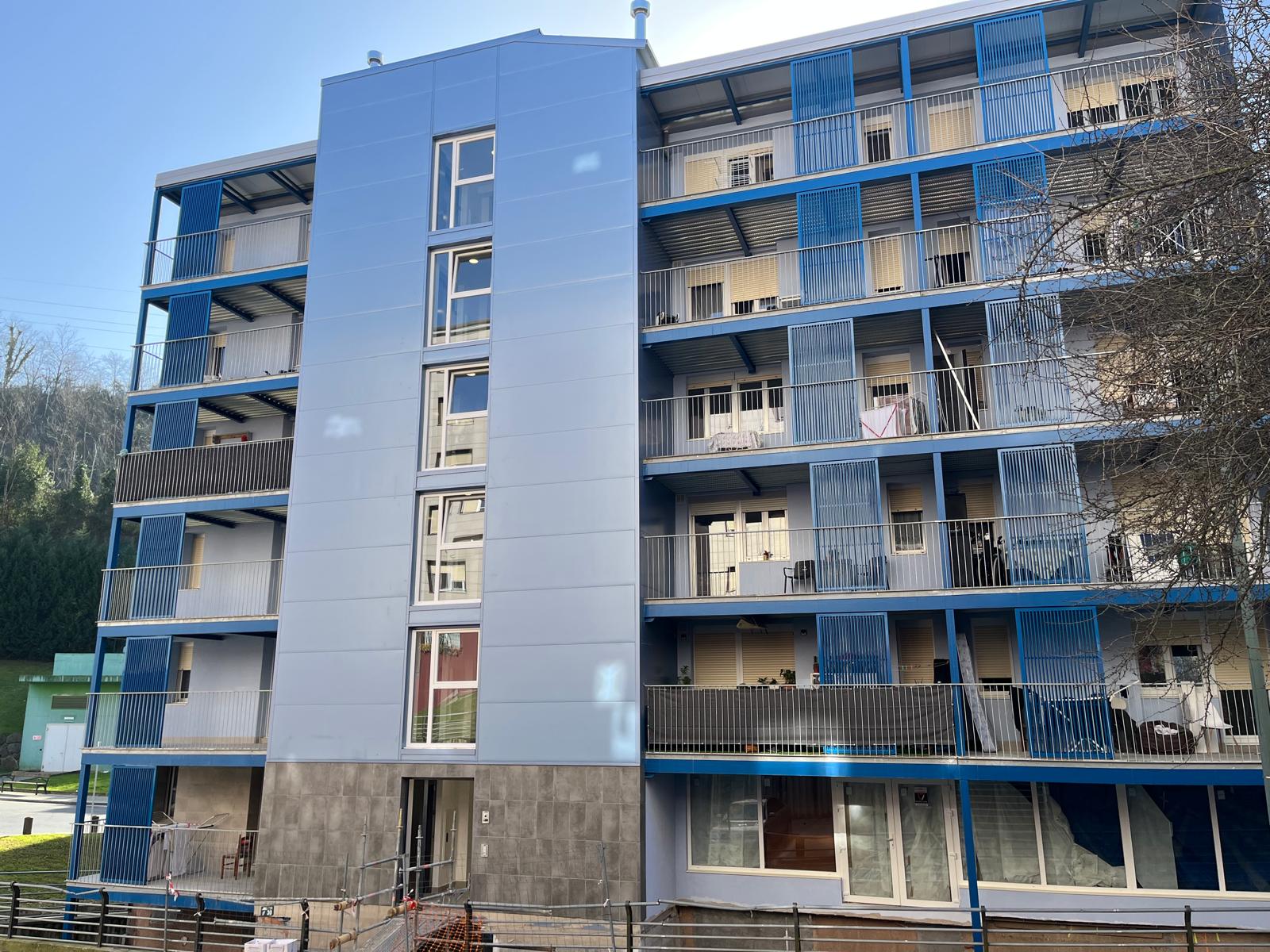
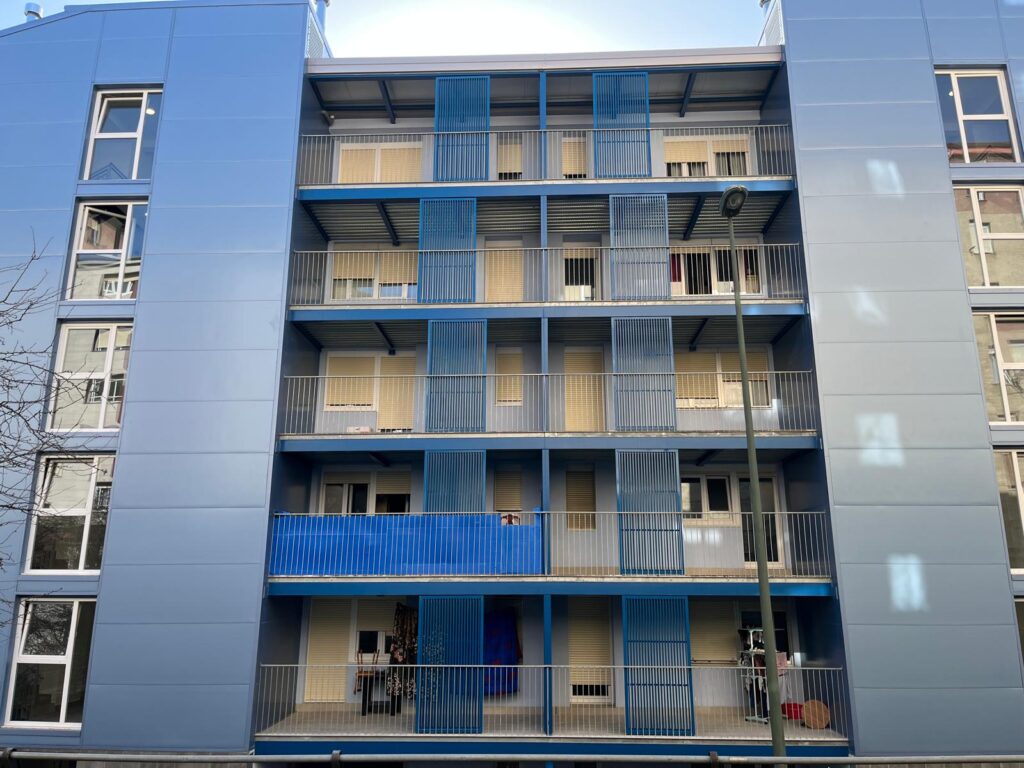
Viviendas Municipales de Bilbao has completed an innovative project to improve the habitability of 84 homes located in a vulnerable area of the city. The intervention consisted of the construction of new terraces of around 12 m², increasing the usable space of these traditionally small dwellings by 24% to 30%. The project forms part of the broader Orain Otxar rehabilitation programme, which also focuses on improving energy efficiency, accessibility, and overall residential comfort in several buildings in Bilbao’s Otxarkoaga neighbourhood.
An Innovative Approach to Expanding Living Space
The most distinctive aspect of the project is its demonstrative and innovative nature, as it represents the first experience in Bilbao in which the usable floor area of “mini-apartments” has been significantly expanded through the construction of terraces supported on public space allocated by the city council.
This intervention combines:
- Creative architectural solutions applied to older buildings in need of improvement.
- The use of urban space to enlarge both municipally owned and privately owned dwellings.
- Integration within a strategic urban regeneration program (Orain Otxar).
This combination of factors makes the project a benchmark for future rehabilitation initiatives in vulnerable neighbourhoods of the city.
Key Results and Impact
The main results are:
- Substantial increase in usable space: The terraces have added 12 m² per dwelling, representing an increase of between 24% and 30% in the total usable floor area.
- Improved habitability and indoor comfort: The homes, originally around 50 m², have gained environmental quality, outdoor space, and new possibilities for everyday use.
- Positive feedback from residents: The reception of this project among residents has been “very positive”, according to both tenants and homeowners consulted by Viviendas Municipales.
- Integration into a broader regeneration process: This innovative initiative has been carried out as part of a larger project known as Orain Otxar, which also includes improvements in accessibility, exterior façades, and energy efficiency in this and other surrounding buildings.
- Significant public investment. The intervention has been supported by:
- An additional €400,000 contributed by the Basque Government.
- €1.86 million from the European Next Generation funds.
- €785,780 in municipal investment.
Lessons learned and Replication Potential
Expanding living space radically improves the quality of life in small homes, especially in neighbourhoods with structural limitations.
- Innovative solutions require institutional collaboration, with the combination of European, municipal, and regional funding being essential.
- The creative use of public space is feasible and can be decisive in improving habitability in older buildings.
- Pilot experiences are useful as replicable models, allowing the identification of techniques and strategies that can be extended to other neighbourhoods with similar characteristics.
A comprehensive neighbourhood-based approach, combining physical rehabilitation and social improvements, strengthens community cohesion and enhances the positive perception of projects.
Find out More
To find out more about this initiative, please contact OAL Viviendas Municipales de Bilbao’s Coordinator through the Members Only Zone. If you are not yet a member of Eurhonet, find out about joining us.
Learn more about the Best Practice here